
Forward and Inverse Kinematics for 3-DOF and 6-DOF Platforms
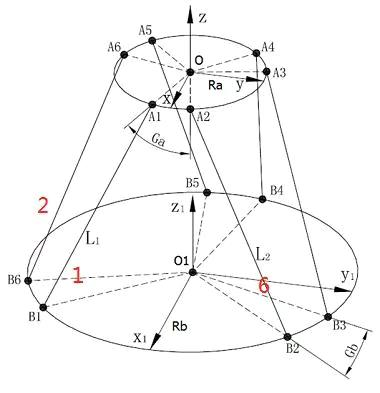

Forward Kinematics
Forward kinematics estimates the platform’s position and orientation from measured actuator lengths and the geometry of the upper and lower joints. For a Stewart platform, the resulting equations are highly nonlinear, so numerical methods such as Newton–Raphson are commonly used to iteratively approach a solution.
Inverse Kinematics
Inverse kinematics starts with the requested platform pose and calculates the length required from each actuator. It is generally more direct and is used to generate real-time servo position commands for coordinated motion.
Applications
- Pose monitoring and calibration
- Trajectory generation and motion control
- Workspace and interference analysis
- Simulation, robotics and attitude-control systems
Real-time implementation also requires coordinate definitions, geometry calibration, limit checking, singularity avoidance, trajectory smoothing and deterministic controller timing.