Platform Control Systems

  • 6-DOF Motion-Platform Control Algorithms
    6-DOF Motion-Platform Control Algorithms

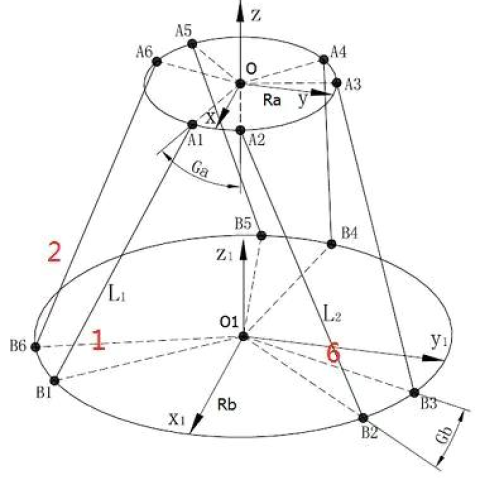
    6-DOF Motion-Platform Control Algorithms Control Principle Six servo motors drive six parallel electric cylinders supporting the moving platform. By coordinating their extension, the controller produces translation along X, Y and Z and rotation about those axes: roll, pitch and yaw. Inverse kinematics converts the requested platform pose into actuator position and velocity commands. Position and velocity feedback close the servo loops, allowing the platform to follow a planned trajectory and stop accurately at the target pose. Forward kinematics may be…
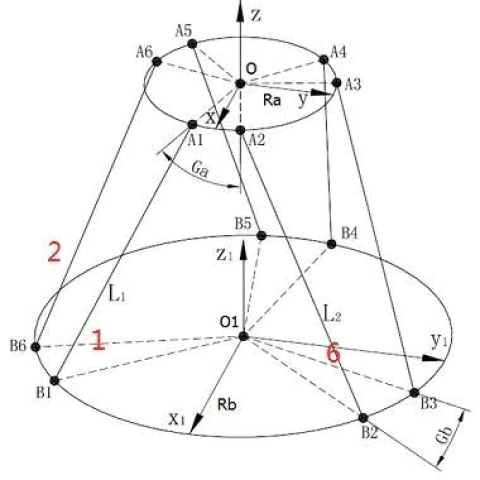
  • Forward and Inverse Kinematics for 3-DOF and 6-DOF Platforms

    Forward and Inverse Kinematics for 3-DOF and 6-DOF Platforms

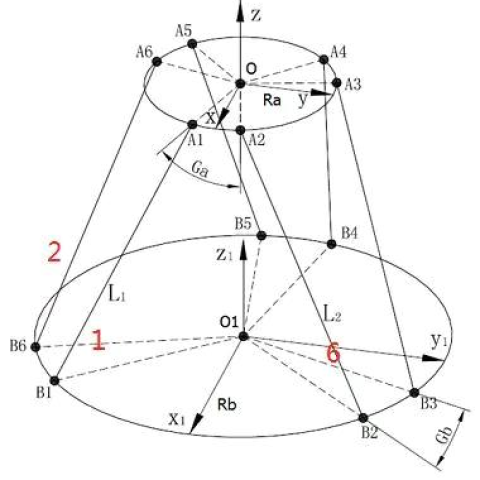
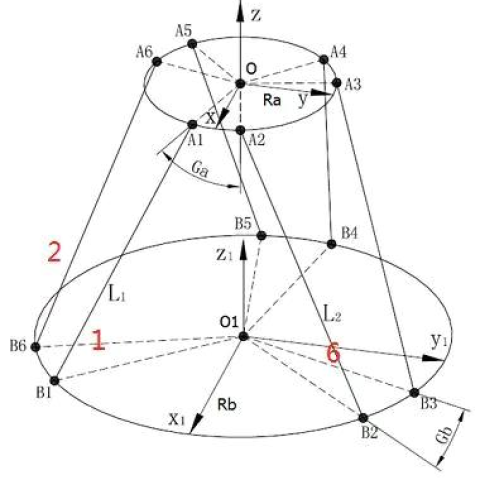
    Forward and Inverse Kinematics for 3-DOF and 6-DOF Platforms Forward Kinematics Forward kinematics estimates the platform’s position and orientation from measured actuator lengths and the geometry of the upper and lower joints. For a Stewart platform, the resulting equations are highly nonlinear, so numerical methods such as Newton–Raphson are commonly used to iteratively approach a solution. Inverse Kinematics Inverse kinematics starts with the requested platform pose and calculates the length required from each actuator. It is generally more direct and…

  • Inverse Kinematics for 3-DOF and 6-DOF Motion Control

    Inverse Kinematics for 3-DOF and 6-DOF Motion Control

    Inverse Kinematics for 3-DOF and 6-DOF Motion Control A platform pose is described by translation along X, Y and Z and rotation about those axes. For a Stewart platform, inverse kinematics calculates the six actuator lengths required to produce a requested pose. Calculation Outline Define the six upper and lower joint coordinates in their local frames. Build the rotation matrix and translation vector for the requested pose. Transform each upper joint into the base coordinate frame. Calculate the distance from…

  • Washout Algorithms for 6-DOF Motion Platforms

    Washout Algorithms for 6-DOF Motion Platforms

    Washout Algorithms for 6-DOF Motion Platforms A washout, or motion-cueing, algorithm converts simulated acceleration and angular-rate data into platform commands while keeping the mechanism inside its limited physical workspace. How It Works Scales and coordinates incoming vehicle-motion signals Uses high-pass components to reproduce short acceleration cues Uses tilt coordination to create sustained acceleration perception within safe angular limits Returns the platform gradually toward its neutral position without creating a noticeable false cue Applies workspace, velocity, acceleration and comfort limits Why…

  • Multi-DOF Motion Controller

    Multi-DOF Motion Controller

    Multi-DOF Motion Controller A multi-axis controller receives high-level pose or trajectory commands, performs kinematic and trajectory calculations, and sends synchronized position, velocity or torque commands to the servo drives. Encoder and sensor feedback closes the control loops and provides system monitoring. Core Functions Coordinated multi-axis interpolation and trajectory generation Forward and inverse kinematics Deterministic real-time control and rapid command response Workspace, actuator and joint-limit protection Homing, initialization, emergency stop and fault handling Data logging, live curves and human-machine interface Interfaces…

We manufacture simulators, multi-DOF motion platforms, electric cylinders and servo-control systems. Selected products are available from stock, and custom solutions are welcome.