6-DOF Motion-Platform Control Algorithms
Control Principle
Six servo motors drive six parallel electric cylinders supporting the moving platform. By coordinating their extension, the controller produces translation along X, Y and Z and rotation about those axes: roll, pitch and yaw.
Inverse kinematics converts the requested platform pose into actuator position and velocity commands. Position and velocity feedback close the servo loops, allowing the platform to follow a planned trajectory and stop accurately at the target pose. Forward kinematics may be used to estimate the actual pose from measured actuator lengths.

Control-System Functions
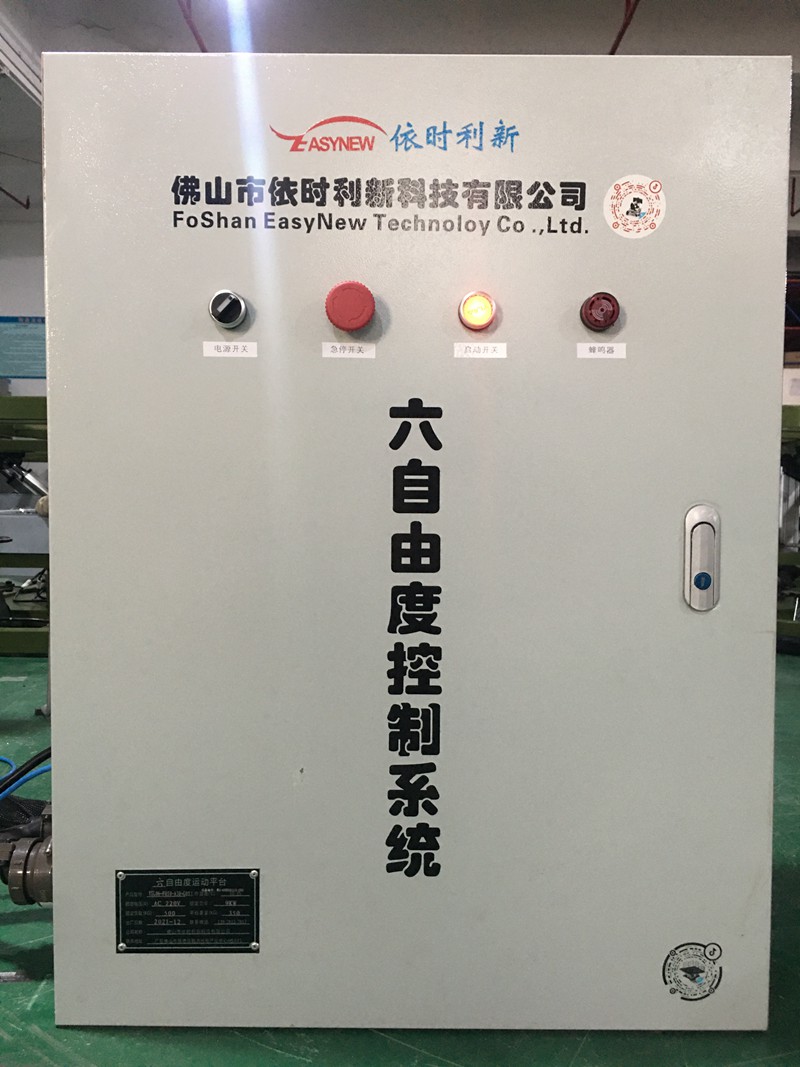
- Position control: coordinated actuator commands within the permitted workspace
- Limits: alarm and protective action if an actuator exceeds its safe range
- Servo alarms: overload, encoder communication, vibration, battery and overheating protection
- Human-machine interface: parameters, commands, platform pose, actuator feedback, curves and operating status
- Emergency stop: immediate safe shutdown for serious faults
- Homing and positioning: automatic return to zero or a specified pose
- Self-test: startup checks and status reporting for control modules